What Stayed With Us After Kochi
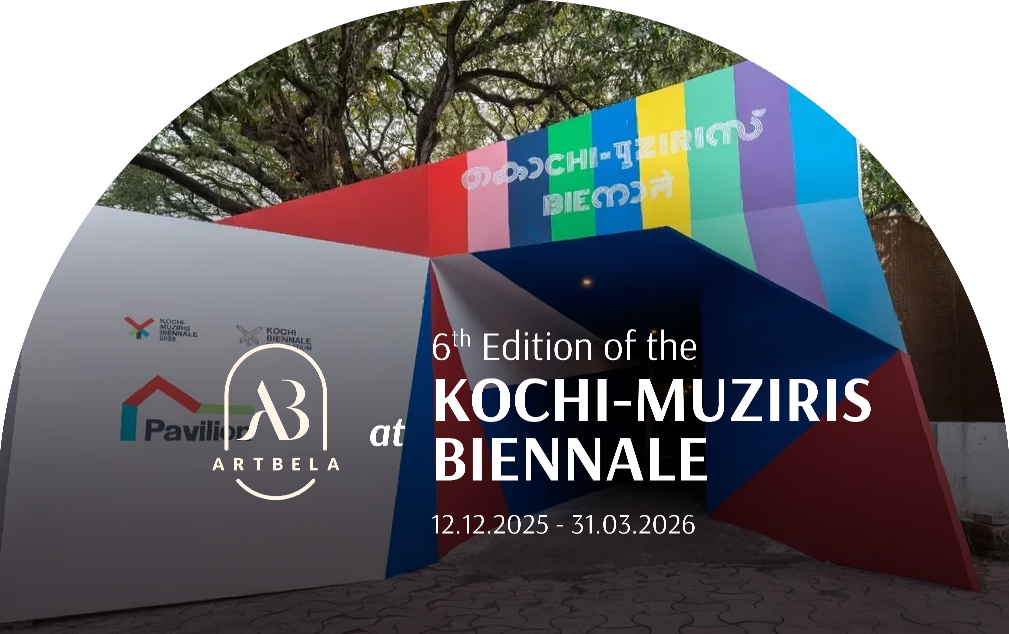
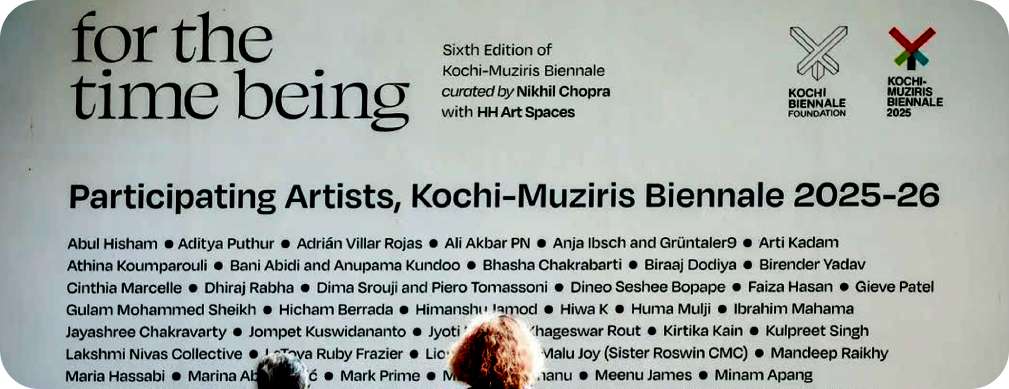
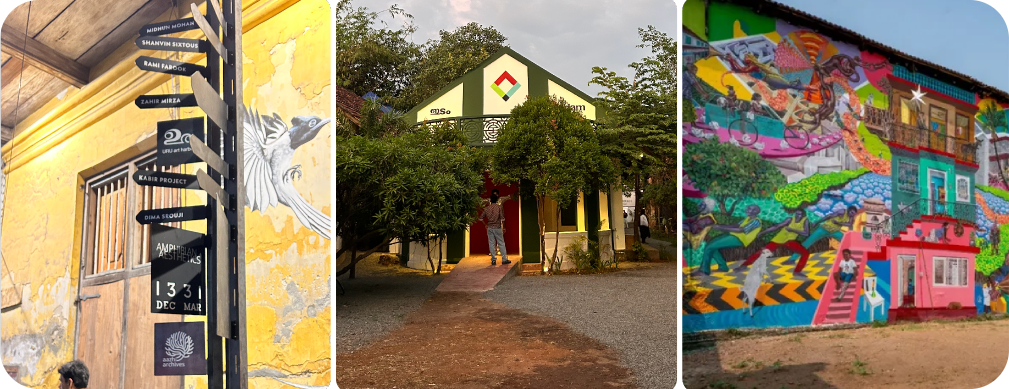
Over the past months, the Kochi-Muziris Biennale 2026 transformed the coastal city into a landscape of questions, memories, and encounters. Across historic warehouses, quiet courtyards, and unexpected corners, artists invited us to move differently.
To slow down, to listen, and to look again.
Rather than a spectacle, this edition felt like a
series of intimate gestures.
Art as Memory
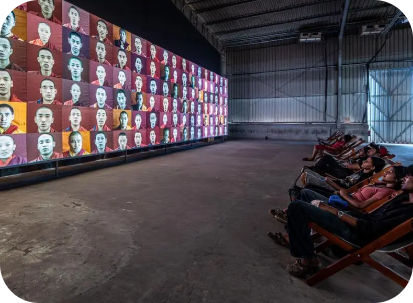
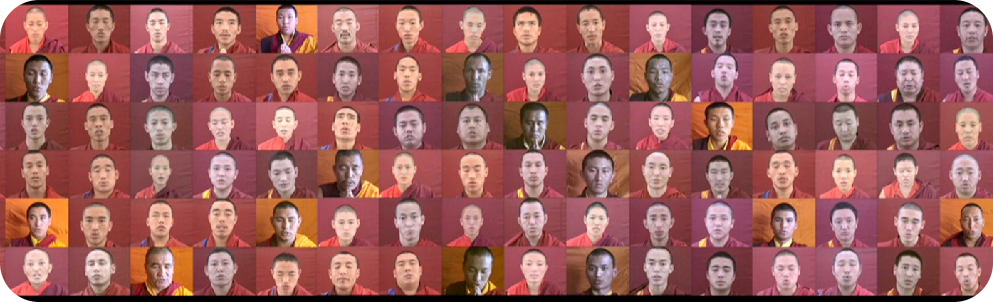
Many practices revisited personal and collective histories. In Marina Abramović’s “Waterfall”, the recorded chanting of 108 monks created a cascading sonic landscape, transforming sound into a meditative experience of collective memory and spiritual continuity.
Bodies, Labour, and Process
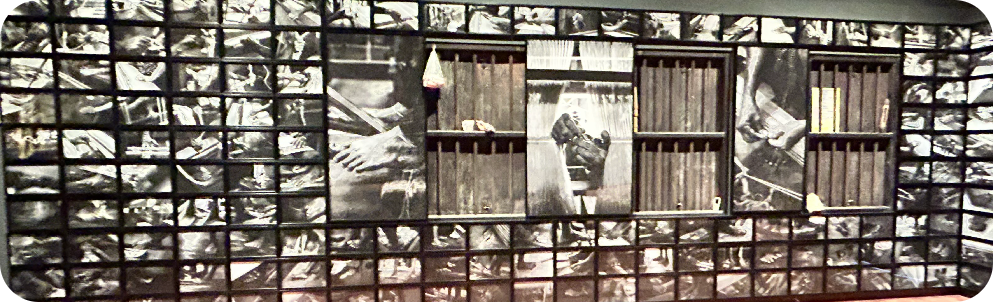
Lakshmi Madhavan’s “Looming Bodies” brought attention to the intimate labour of kasavu weaving through 750 commissioned photographs. It shifted focus from the cloth to the weavers themselves, whose bodies breathe and move in rhythm with the loom.
Material Intelligence
Textiles, natural fibres and handmade processes appeared across Student Biennale exhibitions, highlighting the continued relevance of tactile knowledge and traditional practices within contemporary art.
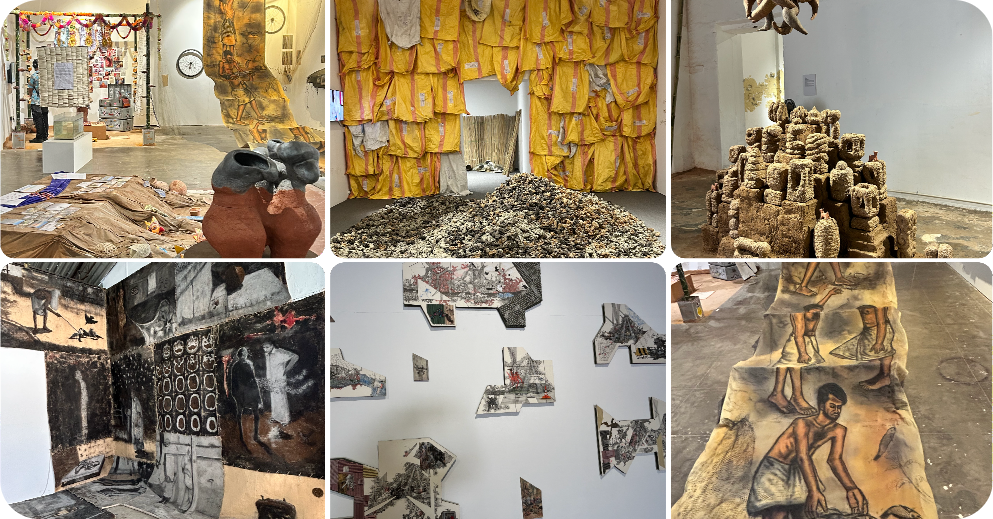
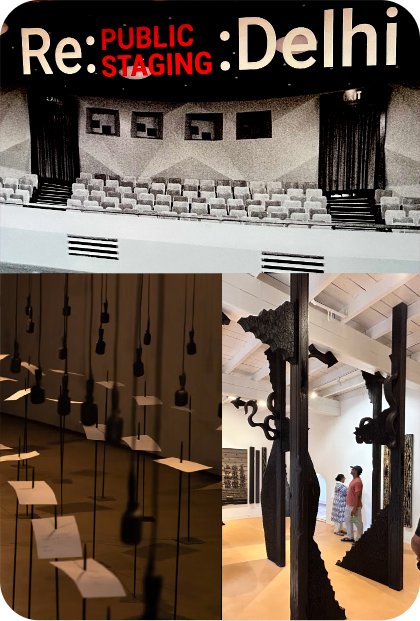
Works That Defined the Edition
- “Re: Public/Staging: Delhi”, presented by Alkazi Theatre Archives with the Alkazi Collection of Photography at Fort Kochi’s Jail of Freedom Struggle, reads theatre as a public archive of everyday life shaped by larger historical moments.
- Shilpa Gupta’s “Listening Air” and “When the Stone Sang to the Glass” invite viewers into intimate rooms where everyday spaces, furniture and surfaces, become quietly resonant sites of reflection.
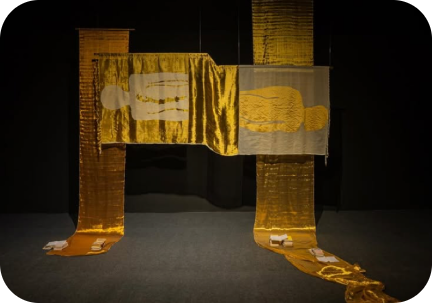
- “Healing Room” by Abul Hisham, reconstructing personal memory and collective experience into tangible spatial forms.
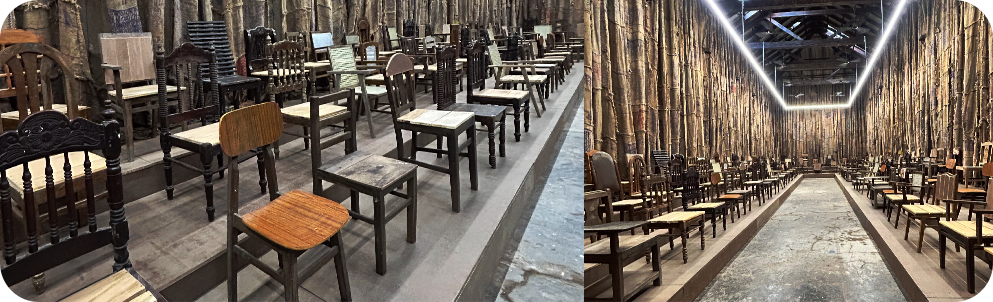
Ibrahim Mahama’s “Parliament of Ghosts” responds to the city’s political and economic histories and the global spectres of colonial extraction.
Perhaps the most lasting gesture of the Biennale was its invitation to pause.